hello, I'm Holiday
A nurse who fell in love with the power of women's bodies and human milk science.
I'm a Registered Nurse (BSN), IBCLC, Childbirth Educator, Birth Doula, and Doctoral student. I've spent a decade beside new families through pregnancy, birth, and breastfeeding, and I've watched, again and again, how much changes when someone simply sits with them, listens and has the education to provide both comfort and evidence-based answers.
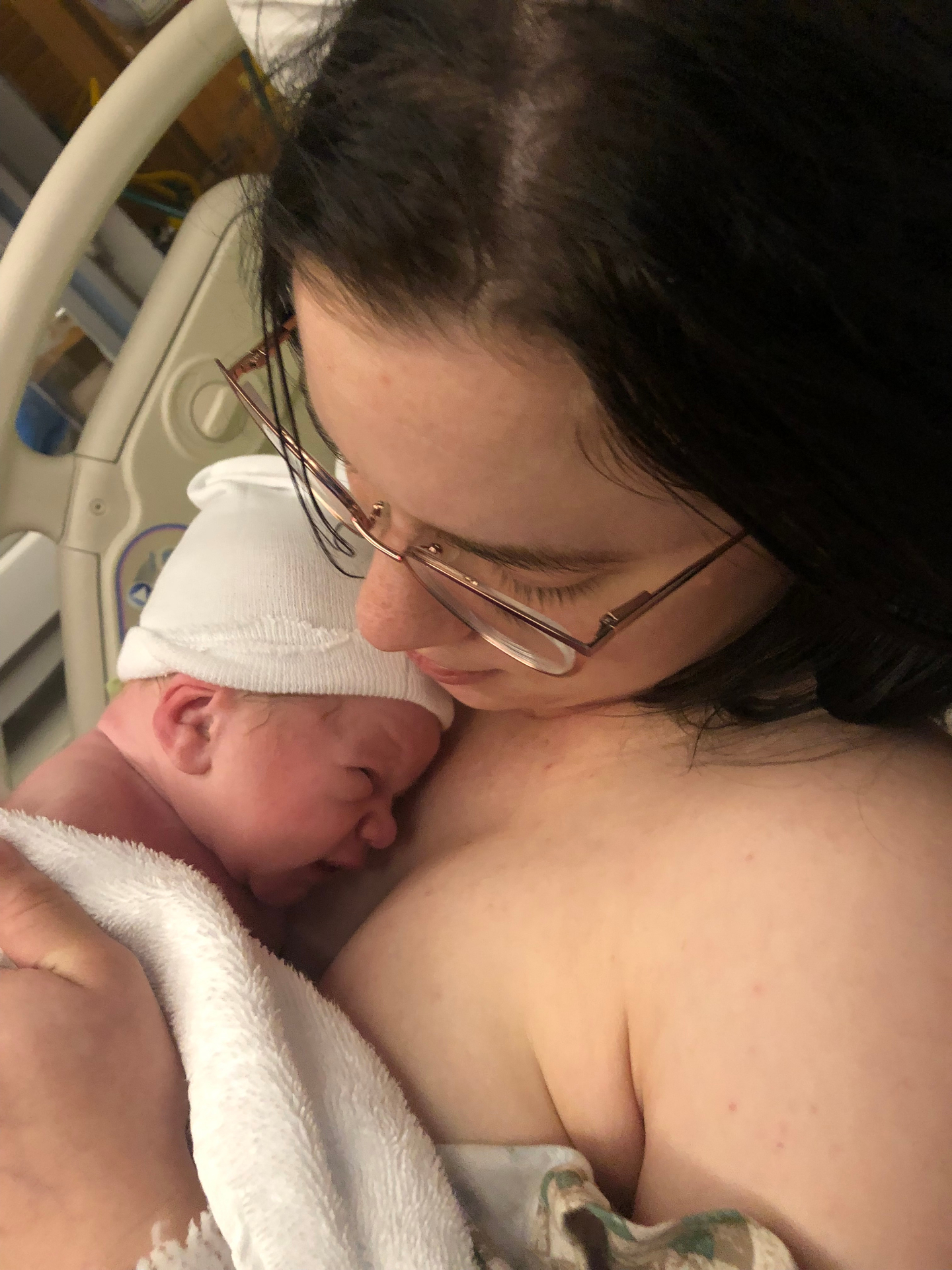
my story
The long way to lactation.
I didn't arrive at lactation work in a straight line.
In nursing school, my breastfeeding education was almost nonexistent: a slide or two, a few bullet points, and very little that reflected the realities on the floor. I kept meeting families whose needs went far beyond what I'd been taught, and I realized how wide the gap was between what parents were living and what most of us, as providers, were prepared to offer.
So I went looking for more. I pieced together online modules that often felt thin and disconnected from practice. I interned for free with IBCLCs just to get basic hands-on skills I could bring back to the mothers I was caring for: how to actually position a baby, how to read a latch with my eyes and my ears, how to support a parent who was exhausted and scared.
I became an IBCLC because mothers deserve more than well-meaning advice, and clinicians deserve more than trial-and-error learning at the bedside. That same gap is why I'm now pursuing a PhD focused on lactation science — to build the kind of rigorous, practice-grounded knowledge I wished I'd had as a new nurse, and to help move breastfeeding education beyond a few slides in a lecture.
Birthmilk is the home for that work, a place for parents and healthcare providers to find evidence-based information.
credentials & training
The letters behind the name.
RN
Registered Nurse with years at the bedside in maternal–newborn care.
IBCLC
International Board Certified Lactation Consultant, the gold standard in lactation.
PhD student
I study how clinical and policy factors shape breastfeeding initiation, exclusivity, and duration. Additionally, human milk research on the cellular level and how different conditions impact milk volume.
WHNP student
I am in school for a master's degree focused on building advanced skills in gynecologic and obstetric assessment to support women's health across the lifespan.
recent work
PhD student publications.
Solly, H. H., Clark, R. R. S., & Spatz, D. L. (2026). The Effect of Magnesium Sulfate in the Treatment of Maternal Postpartum Hypertension on Breastfeeding: An Integrative Review. Breastfeeding Medicine, 21(3), 171–185.
https://doi.org/10.1177/15568253261415867Solly, H. H., Lisanti, A. J., Kamen, A., & Spatz, D. L. (2026). Influence of Hospital Policy and Nurse Competency on Rates of Skin-to-Skin Contact in Neonates. Nursing for Women's Health, S1751-4851(26)00035-8. Advance online publication.
https://doi.org/10.1016/j.nwh.2025.11.005Solly, H. H., Kamen, A., Markonda, L., Clark, R. R. S., & Spatz, D. L. (2026). Comprehensive Hands-on Breastfeeding Education for Maternity Nurses Provided by Hospitals Is Associated With Higher Exclusive Breastmilk Feeding Rates During the Birth Hospitalization. MCN: The American Journal of Maternal Child Nursing, 51(2), 75–82.
https://doi.org/10.1097/NMC.0000000000001176Solly, H. H. (2026). Benefits of Breast Crawl in the Laid-Back Position After Birth. MCN: The American Journal of Maternal Child Nursing, 51(3), 174.
https://doi.org/10.1097/NMC.0000000000001192
Want to talk?
Book a consult, or send a note. Parents and providers are both welcome.